


 Deutsch
 English
 Español
 Français
 Nederlands
 Português


 Share
Share




The World Economic Forum's Global Risks Report 2026, released in January 2026, has ranked geoeconomic confrontation as the top near-term global risk, surpassing state-based armed conflict for the first time. With 18% of surveyed experts selecting it as the most likely trigger of a global crisis this year, the designation marks a strategic inflection point for international trade and supply chains. According to the Thomson Reuters 2026 Global Trade Report, 72% of trade professionals now identify US tariff volatility as the most disruptive regulatory force, while 65% of firms are actively restructuring sourcing patterns. This article analyzes how tariff weaponization, nearshoring, and critical mineral competition are permanently reshaping global trade architecture in 2026.
What Is Geoeconomic Confrontation?
Geoeconomic confrontation refers to the use of economic tools — tariffs, sanctions, export controls, investment screening, and technology restrictions — as instruments of strategic competition between states. Unlike traditional trade disputes, geoeconomic confrontation is deliberate, state-directed, and aimed at weakening an adversary's economic and technological base. The WEF report notes that geoeconomic confrontation surged eight positions in the rankings from 2025 to become the top risk over the two-year horizon (2026–2028). It is closely linked to other top risks including state-based armed conflict (ranked second), societal polarization, and misinformation. The rise of geoeconomic confrontation reflects a broader retreat from multilateralism and the emergence of what the WEF calls an 'age of competition.'
Tariff Volatility and Supply Chain Restructuring
US Tariffs as the Dominant Disruptor
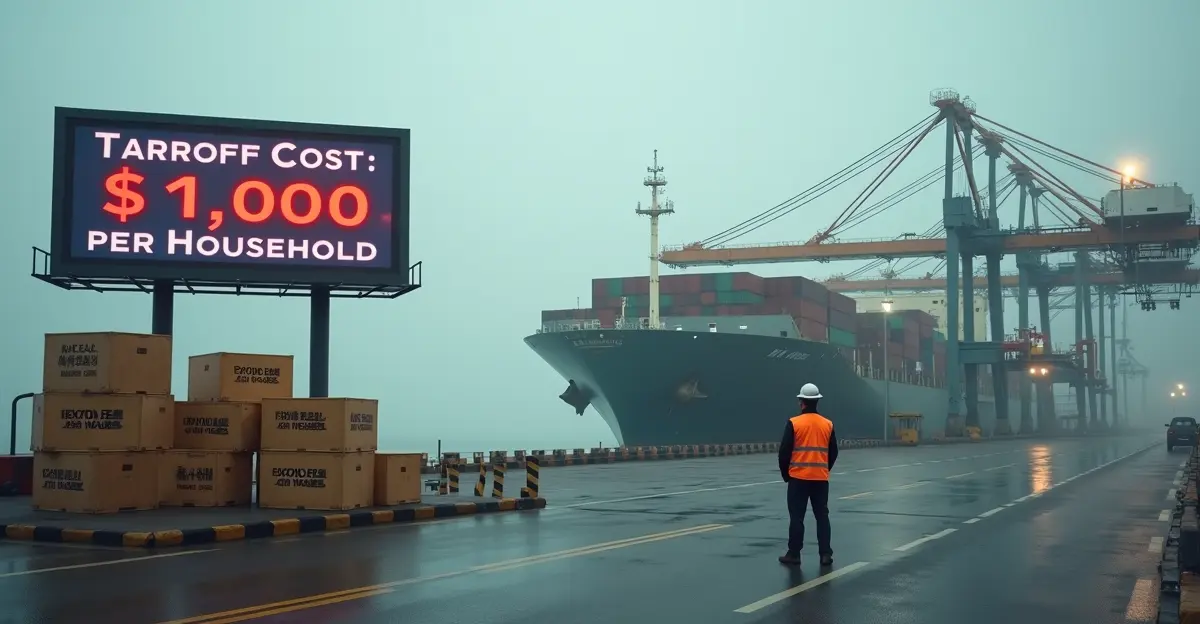
The January 2026 escalation of US tariffs on Chinese goods — including combined rates of 110–145% on electric vehicles — has triggered the most rapid global supply chain restructuring in a generation. The Thomson Reuters report found that 72% of trade professionals now cite US tariff volatility as the dominant challenge, nearly double the rate in 2024. A striking 65% of firms have changed sourcing patterns, with 51% adopting nearshoring strategies. However, 39% of firms are now absorbing tariff costs rather than passing them to customers, up from just 13% in 2024, signaling a deepening margin squeeze across industries. The tech and semiconductor sectors have been hardest hit, with supply chain resilience strategies becoming a boardroom priority.
Mexico Overtakes China as Top US Trading Partner
In a historic structural shift, Mexico has surpassed China as the United States' largest trading partner for the third consecutive year. Bilateral trade exceeded $872.8 billion in 2025, with Mexican exports reaching $475.6 billion versus China's $427 billion — a 20% decline in Chinese imports. This realignment is driven by nearshoring, reshoring, and friend-shoring strategies accelerated by US-China tensions, pandemic-era vulnerabilities, and policy incentives such as the CHIPS Act and USMCA advantages. Companies across automotive, electronics, and medical devices sectors are relocating to Mexico for shorter lead times (15–20 days vs. 40–60 from Asia) and tariff preferences. Laredo, Texas now handles 55% of cross-border freight, while industrial vacancy rates in Mexican border markets have fallen below 2%. The upcoming USMCA review under Article 34.7 adds strategic importance, as North America represents approximately 30% of world GDP.
Fragmentation of the Multilateral Trading System
Since 2020, governments have enacted nearly 18,000 discriminatory trade measures — tariff hikes, non-tariff barriers, and sanctions — fragmenting the post-war multilateral trading system. These measures now affect roughly two-thirds of global trade. The WTO remains paralyzed, unable to update rules for digital trade, services, or state-owned enterprises. US-China bilateral trade has shrunk by about 30%, with an estimated $165 billion in trade flows redirected through third countries like Vietnam and Mexico. Vietnam's manufacturing output grew 16.4% in 2025, making it a primary beneficiary of the trade diversion. Meanwhile, a counter-movement is accelerating: South-South trade surged to $6.8 trillion in 2025, with 57% of developing-country exports now flowing to other developing economies, up from less than 40% a decade ago. Services trade grew 9% in 2025, now accounting for 27% of global trade, though a stark digital divide persists. Global GDP growth is projected to stagnate at 2.6% in 2026, below the pre-pandemic average. The fragmentation of global trade rules is creating both risks and opportunities for emerging economies.
Critical Mineral Competition Intensifies
The race for critical minerals — lithium, cobalt, graphite, rare earths — has become a central theater of geoeconomic confrontation. The 2026 Critical Minerals Ministerial, hosted by US Secretary of State Marco Rubio, marked a watershed moment. The US mobilized over $30 billion for critical minerals projects, signed 11 new bilateral frameworks, and launched Project Vault — a $10 billion strategic reserve financed by the largest EXIM Bank loan in history. The new FORGE coalition (Forum on Resource Geostrategic Engagement) aims to create a preferential trade-and-investment zone with coordinated price floors. Despite these efforts, China maintains 60–80% processing dominance through 2035, controlling about 90% of current global capacity for graphite and rare earths, and has deployed over $120 billion in outbound investment since 2023. Saudi Arabia ($2.5 trillion in mineral reserves) and the UAE are emerging as significant financing powers, with Saudi Maaden planning $110 billion in mining investments. The critical minerals supply chain race is reshaping power dynamics around resources essential for AI, robotics, batteries, and defense systems.
Expert Perspectives
Geoeconomic confrontation is not a temporary disruption — it is the new operating system for global trade. Companies that treat tariff volatility as a short-term problem rather than a structural shift will find themselves strategically exposed, said a senior trade analyst at the WEF. The report's lead author added: The age of competition means that economic interdependence, once seen as a guarantor of peace, is now being weaponized. Supply chains are being redesigned for resilience, not efficiency, and that comes with significant costs.
FAQ
What is geoeconomic confrontation?
Geoeconomic confrontation is the use of economic tools such as tariffs, sanctions, export controls, and technology restrictions as instruments of strategic competition between states, aimed at weakening an adversary's economic and technological base.
Why did geoeconomic confrontation become the top risk in 2026?
The WEF Global Risks Report 2026 ranked it first due to the rapid escalation of US-China tariff wars, the proliferation of discriminatory trade measures (18,000 since 2020), and the weaponization of supply chains and critical minerals. It surged eight positions from 2025.
How are supply chains changing in 2026?
65% of firms are restructuring sourcing patterns, with 51% adopting nearshoring. Mexico has overtaken China as the US's top trading partner. Companies are prioritizing resilience and security over cost efficiency, accepting 15–25% cost premiums for shorter, more secure supply chains.
What role do critical minerals play in geoeconomic confrontation?
Critical minerals like lithium, cobalt, and rare earths are essential for AI, batteries, and defense. China dominates processing (60–80% globally), while the US and allies are investing billions to build alternative supply chains through bilateral deals and strategic reserves.
How many discriminatory trade measures have been enacted since 2020?
Nearly 18,000 discriminatory trade measures — including tariff hikes, non-tariff barriers, and sanctions — have been enacted since 2020, fragmenting the multilateral trading system and affecting roughly two-thirds of global trade.
Conclusion: A New Trade Architecture
The WEF's designation of geoeconomic confrontation as the top risk for 2026 confirms a strategic inflection point. Global trade is no longer driven by comparative advantage and multilateral rules, but by geopolitical alignment, national security, and supply chain resilience. The rise of nearshoring, the fragmentation of the WTO system, and the intensifying competition for critical minerals are permanent features of the new landscape. For businesses and policymakers, adapting to this reality — rather than waiting for a return to the old order — will define success in the years ahead.




Follow Discussion